ED-1
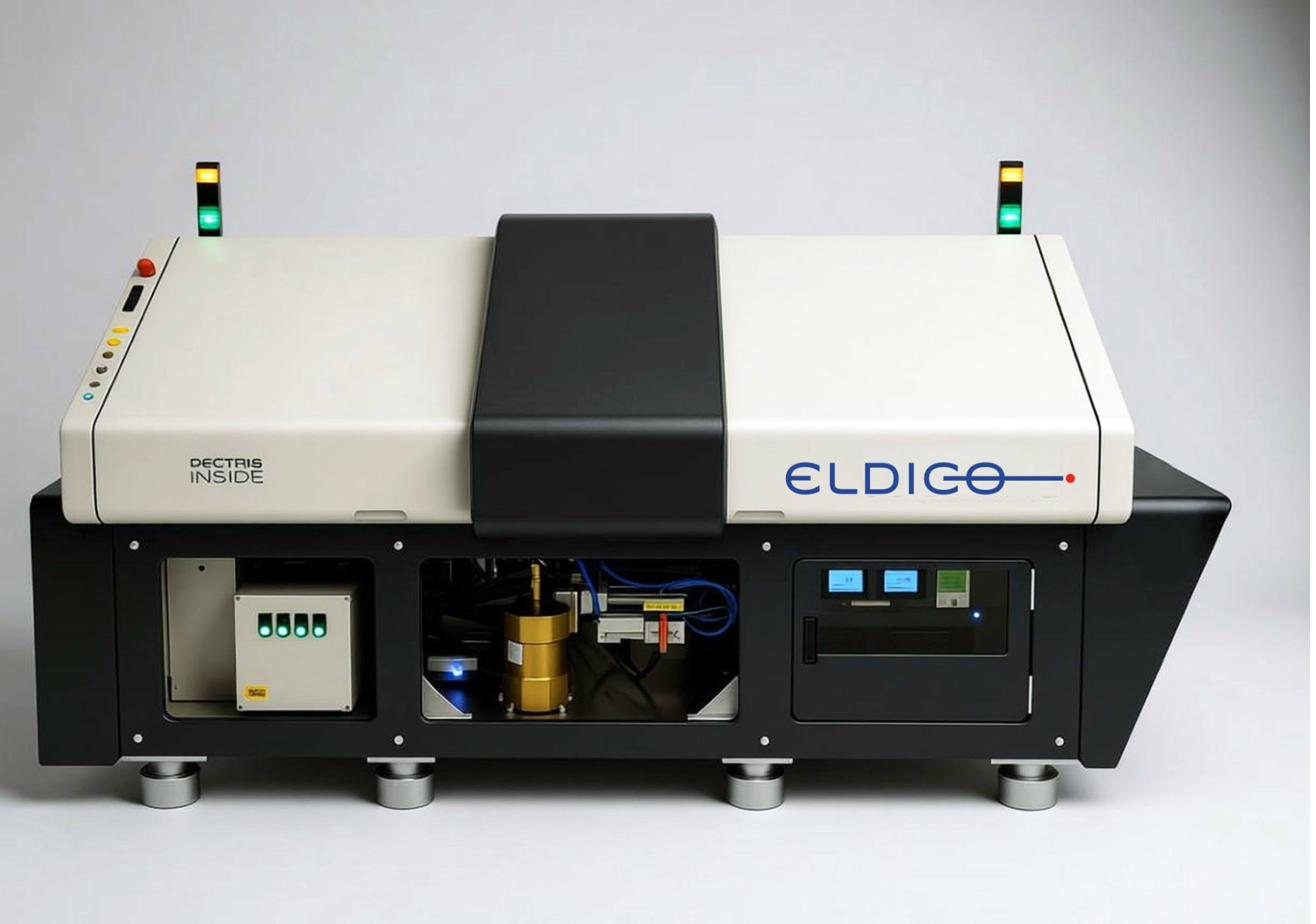
The dedicated electron diffractometer.
We designed the ED-1 for 3D electron diffraction from day one. Solving a structure from nanocrystals becomes a routine measurement you can repeat, free of microscope-based constraints.
Pharma
The ED-1 is widely used in pharmaceutical solid-form analysis. See MicroED for pharma →
Capability
What you can solve with the ED-1.
Structures from nanocrystals
Get full single-crystal-quality structures from crystals well under a micrometre, typically down to about 50 nm depending on the sample. That's far smaller than anything single-crystal X-ray can work with.
Trace and minor phases
The ED-1 measures one crystallite at a time. So a phase that sits below the detection limit of XRPD can still be found and solved without limitations.
Air- and moisture-sensitive material
Reactive, hygroscopic and cryo-prepared samples travel from the glovebox to the instrument along a sealed, inert path. They never see air, moisture or ice.
Scarce material
You only need milligrams of sample, which makes it practical for early-stage APIs, precious batches and forensic amounts.
Engineering
The hardware behind the technology.
The ED-1 isn't a retrofitted microscope. We designed each core component for electron diffraction, and they work together as one integrated and easy-to-use measurement system.
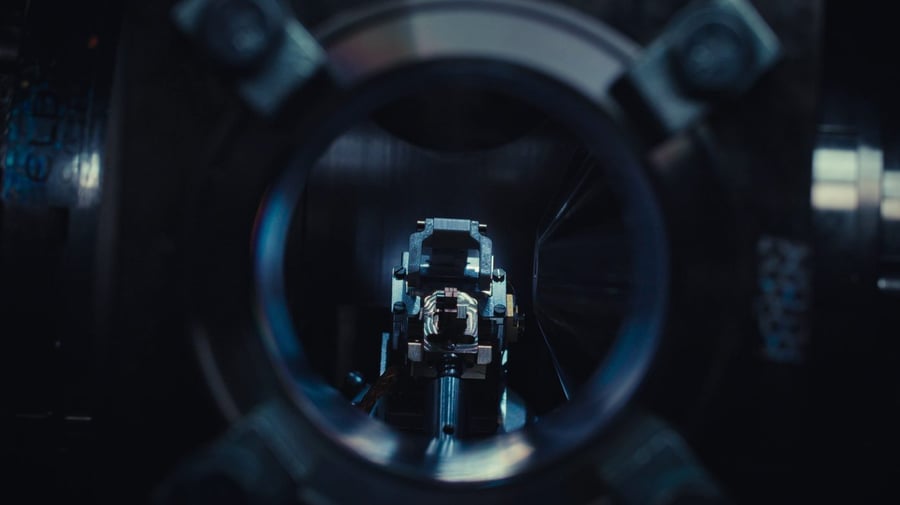
The goniometer
Align and rotate around any particle on the grid.
Five independent translation axes and one rotation axis let you centre any crystallite in the beam and rotate around it. It's the same principle as single-crystal X-ray, applied to nanocrystals. A small sphere of confusion keeps the particle in the beam across a wide rotation range (−100° to +100°), and contact cryo-cooling is built in.
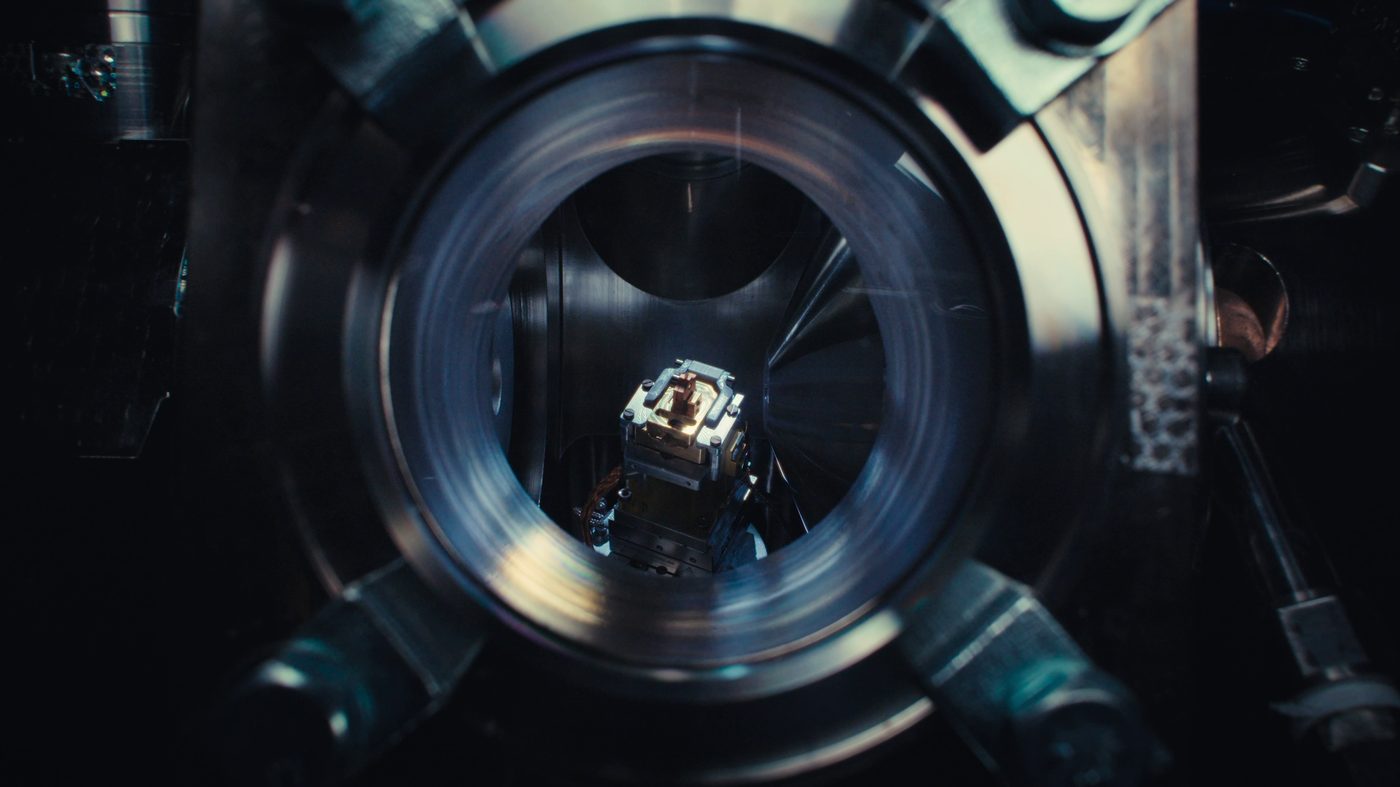
This is what makes electron diffraction repeatable. You find, align and measure each particle on purpose, and you can run serial ED and crystal mapping on a single grid.
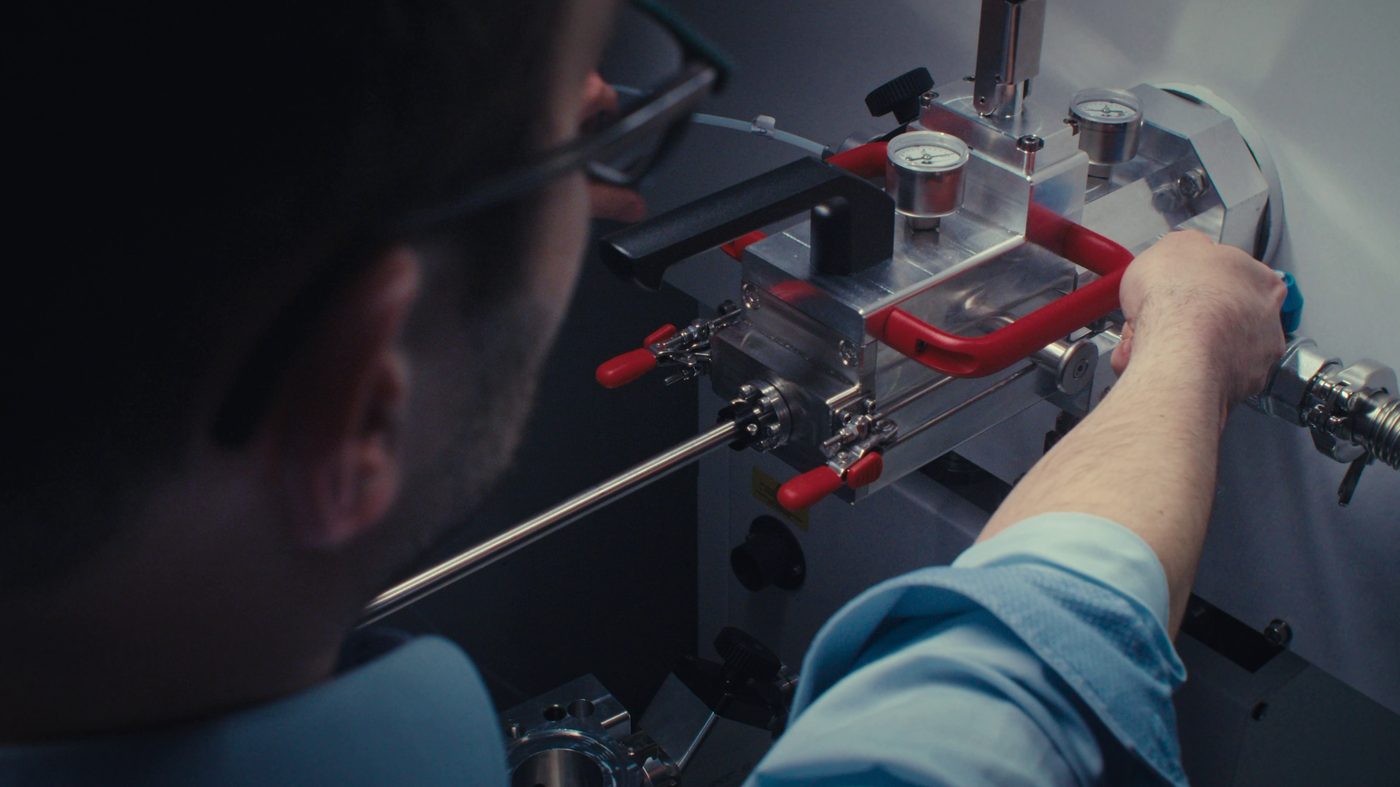
Inert sample transfer
A sealed transfer device takes your samples from the glovebox to the instrument without any contact with air, moisture or ice.
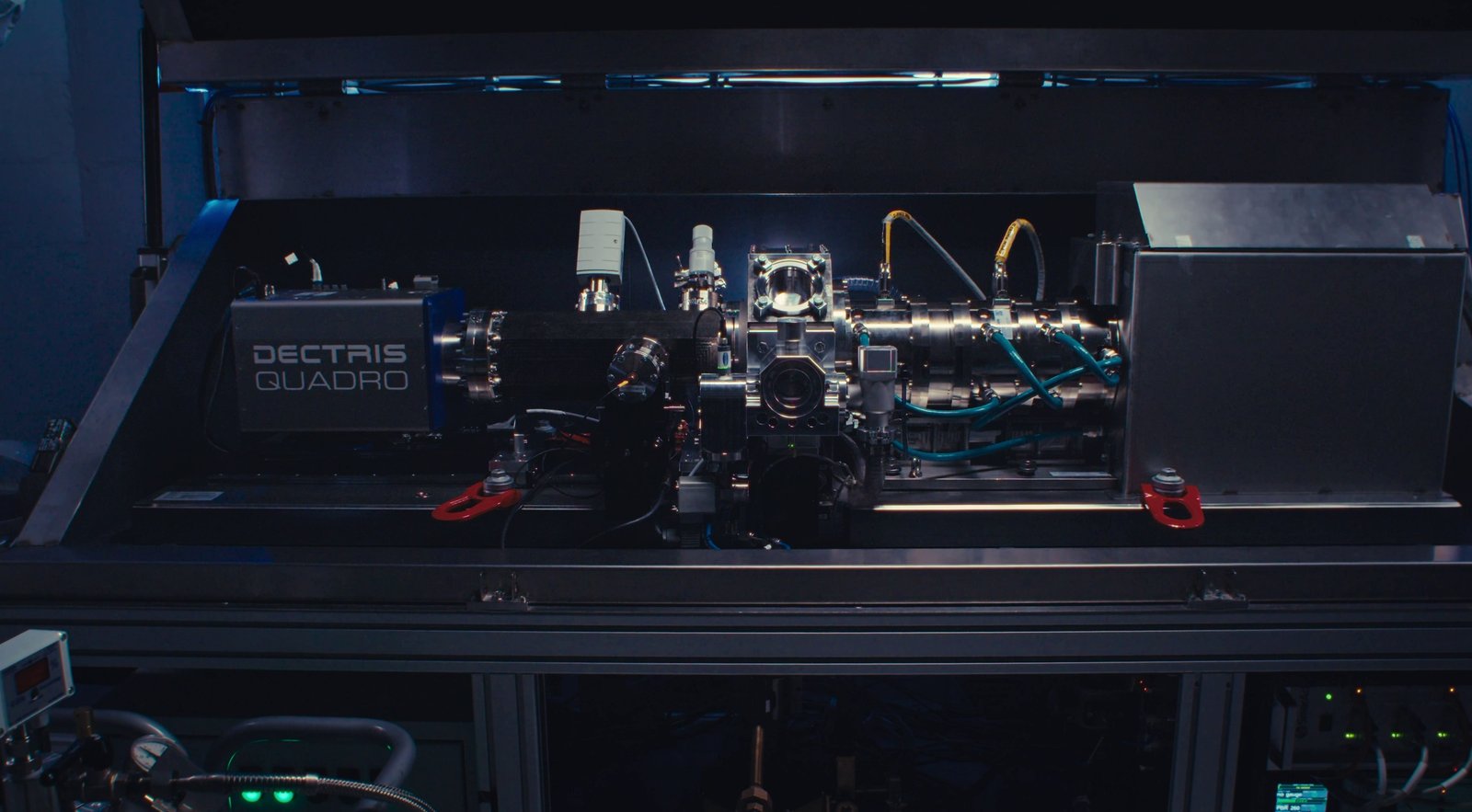
DECTRIS HPAD noise-free detector
Fast, clean readout with no beam stop and a short dead time. You get undistorted raw data that goes straight into the structure-solution software you already use.
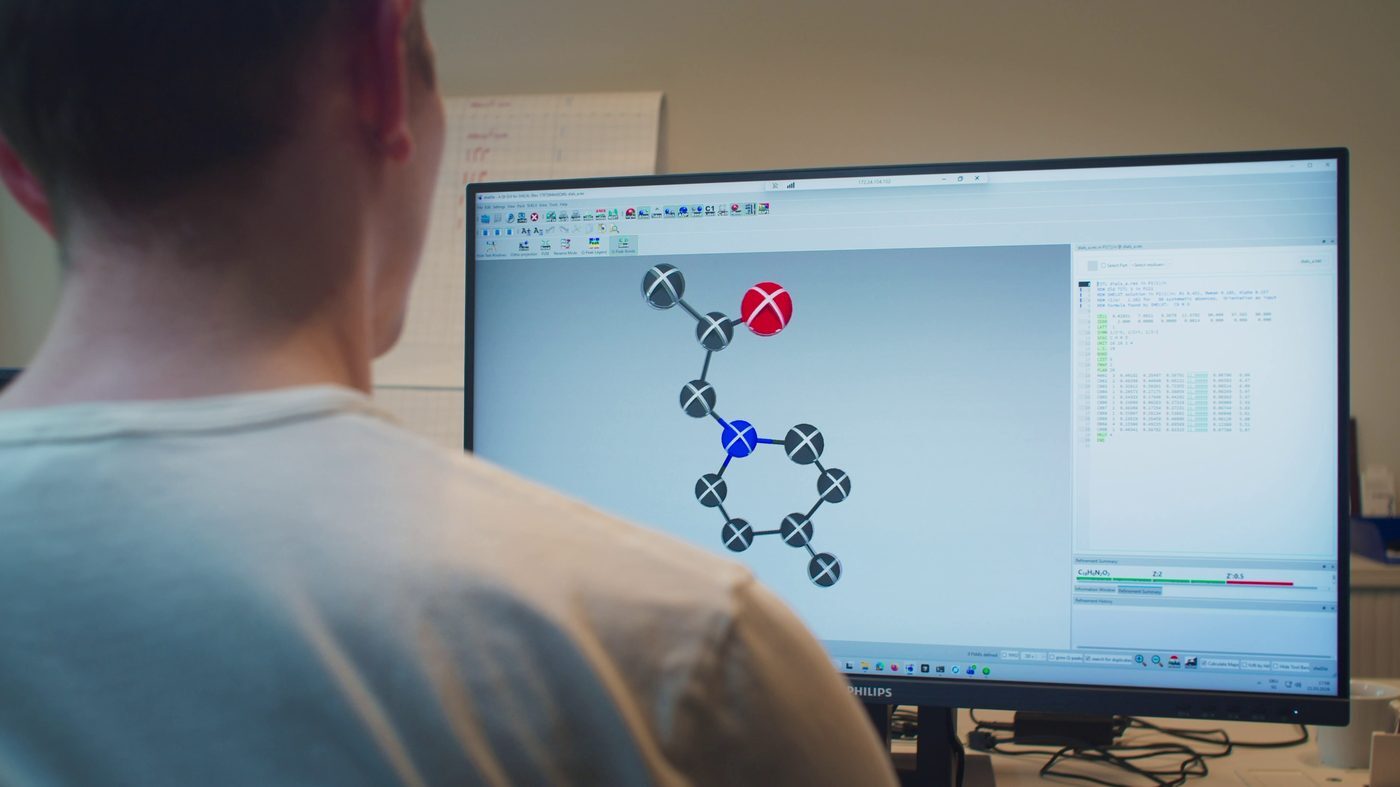
Built for automation
Our software takes care of particle recognition, alignment and data evaluation, so you can use the ED-1 like any other routine instrument in the lab.
The goniometer has a large sample area with room for custom and multi-sample holders, so you can scale up to larger sample sets as your work grows.
Configurations
Designed for your samples.
The ED-1 comes in a few configurations, depending on the samples and questions your lab works with. We'll work out which one fits when we go through the specifications with you.
Core
Everything you need to determine structures from difficult crystalline material.
Extended sample handling
Extra preparation and environment options for demanding or sensitive samples.
Lab integration
Set up to sit alongside XRPD and the other techniques already in your lab.
Application fit
Who it's for.
Pharmaceutical R&D and QC
Routine solid-form work on polymorphs, salts, cocrystals, hydrates and impurities, once sending every sample out starts to hold you up.
Agrochemical & fine chemical
Get reliable structures in-house for compounds that won't cooperate with conventional crystallography.
Academic crystallography
For groups pushing the limits of nanocrystal structure work who want ED in their own lab.
Contract and analytical labs
Add electron diffraction to your services and give clients something most labs can't offer.
Why dedicated matters
Why a dedicated instrument?
Reproducibility
The geometry and workflow are designed around electron diffraction, so your results stay consistent from one run to the next.
Accessible operation
Your own crystallographers can run it. You don't need an electron microscopist on hand.
One connected workflow
Sample handling, data collection and structure solution all follow one path, so there's nothing to stitch together.
Want the full specifications?
We send the full technical specifications, configuration details and commercial terms directly, based on your application. It starts with a short call with our instrument team, so what you get fits your material and your lab.
Tell us about your application and we'll take it from there.