
#24/7ED · The Electron Diffraction Company
Sample to Certainty.
When your crystals are too small for single-crystal X-ray and hidden below the powder-diffraction threshold, electron diffraction resolves the structure – directly from the nanocrystals themselves.
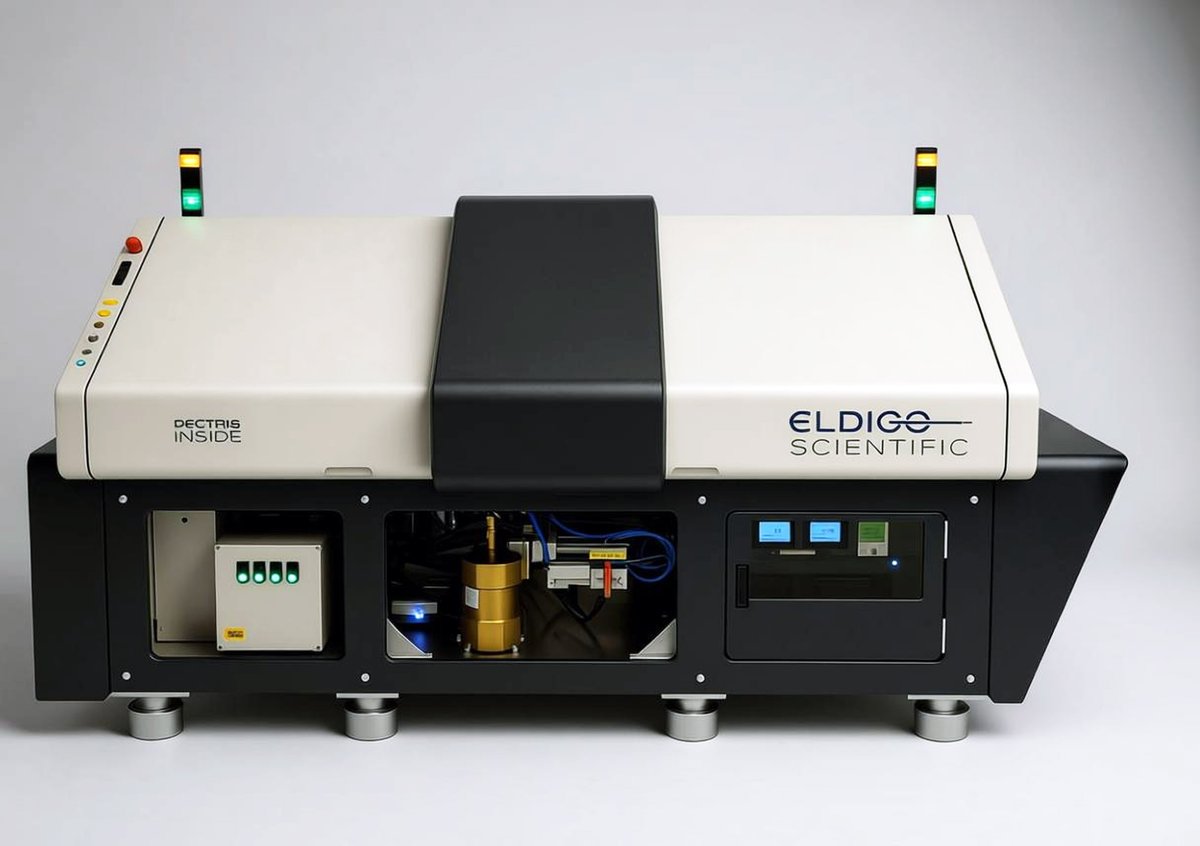
Who we are
The Electron Diffraction Company.
The problem
The structure is there. Your current methods just can't see it.
Crystals too small for SCXRD
Single-crystal X-ray needs crystals you often cannot grow. Electron diffraction works down to 10–100 nm crystallites.
Below the PXRD threshold
Powder X-ray misses trace phases and impurities under ~1–2% mass. ED operates at the single-crystallite level.
Scarce & precious material
Too little material to grow a diffraction-quality crystal for X-ray. Electron diffraction solves the structure from just a few milligrams.
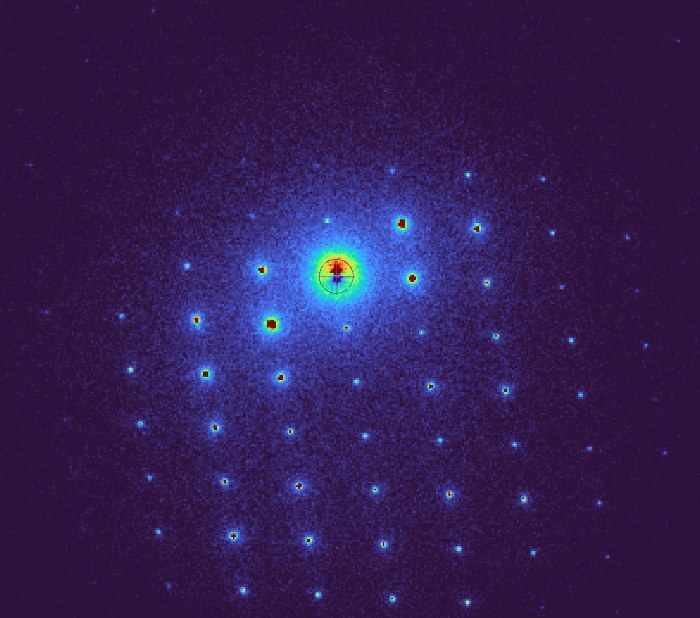
The method
Electron diffraction, as a service.
Send us your sample. Our team runs the electron-diffraction workflow and returns a crystal structure – with a feasibility check first if you're not sure it fits. Service-led, results-first.
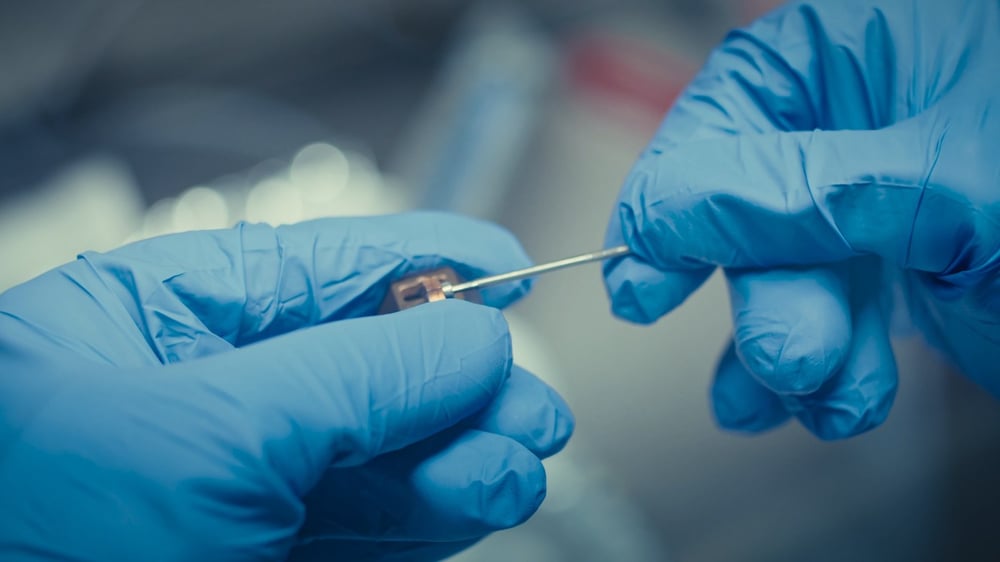
Latest application notes
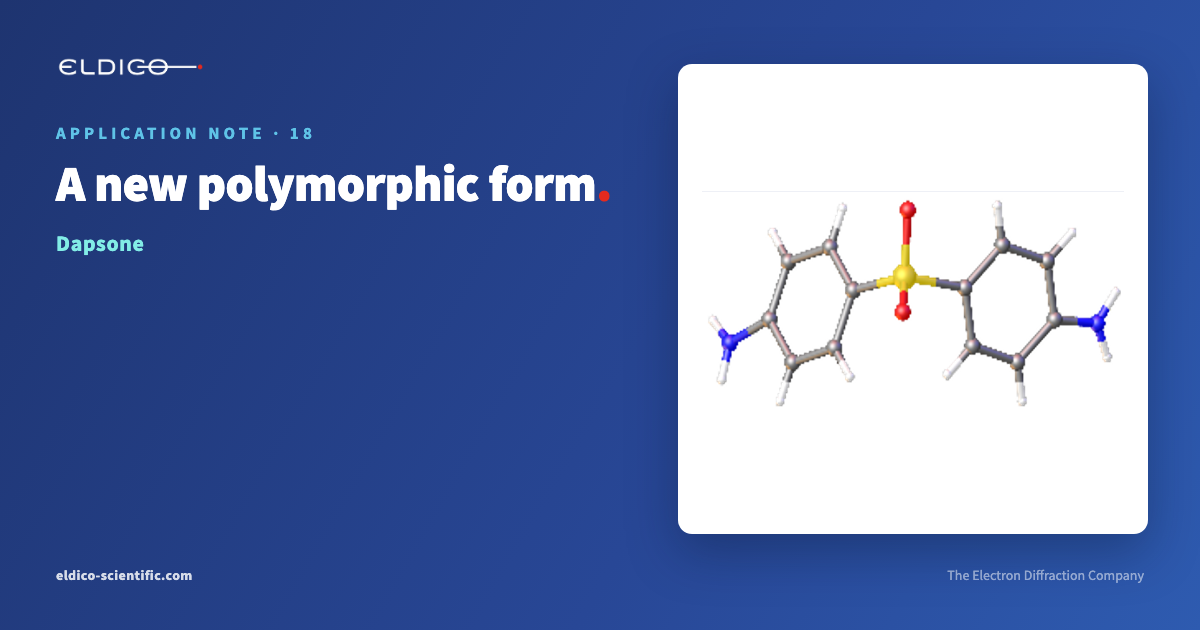
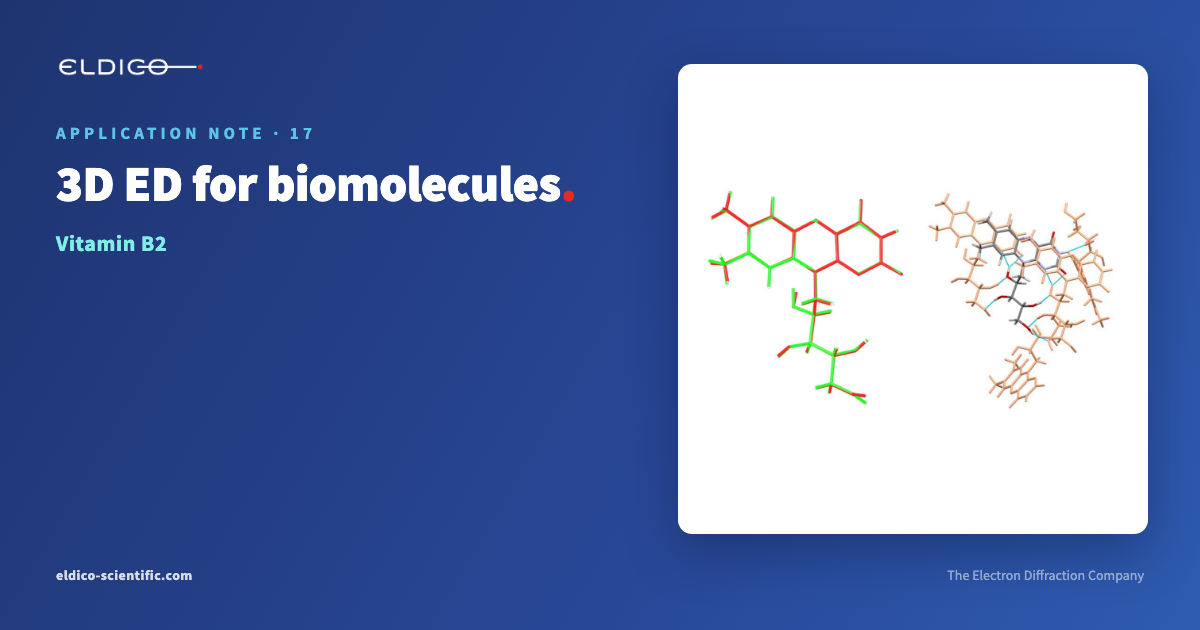
Real solid-form, absolute-configuration and materials-science cases, solved by ED.
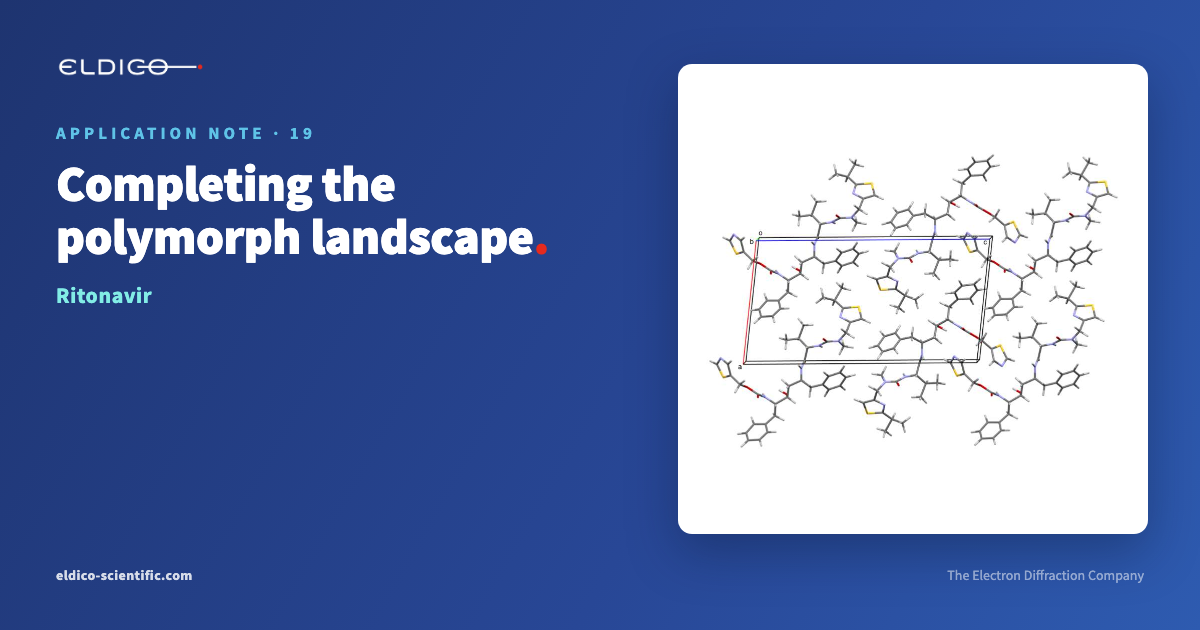
Latest news
What's new at ELDICO.
Application · 2026-05-20
How 3D electron diffraction solved lutein – and enabled a landmark patent
A structure determination that underpinned a landmark patent.
Read more →Distribution · 2026-04-16
ELDICO to enable first dedicated MicroED deployment in Asia-Pacific
Crystal Pharmatech brings dedicated electron diffraction to the Asia-Pacific region.
Read more →Insight · 2026-02-27
Electron diffraction: the missing link between SC-XRD and XRPD
Where dedicated electron diffraction fits between single-crystal and powder X-ray.
Read more →Proof
Real structures, solved.
From a marketed-drug polymorph to chiral absolute configuration, electron diffraction has resolved structures that matter – commercially and scientifically. See the DOI-backed cases behind the service.





Trusted in peer-reviewed science
ED-1 data in the literature.
Structures solved with ELDICO electron diffraction appear in peer-reviewed journals across pharma, agrochem and materials.
FAQ
Electron diffraction, briefly.
What is electron diffraction (3D ED / MicroED)?
A structure-determination method that uses electrons instead of X-rays to solve crystal structures from crystallites far too small for single-crystal X-ray – down to 10–100 nm. It is also called 3D ED or MicroED.
How do you get a structure from a nanogram or sub-micron crystal?
Electrons interact far more strongly with matter than X-rays, so a single sub-micron crystallite gives measurable diffraction. We collect 3D diffraction data by rotating the nanocrystal, then solve and refine the structure – from just a few milligrams of sample.
What is an ED-CRO service?
You send a sample; our team runs the full electron-diffraction workflow – feasibility, measurement, structure solution and a report – and returns the crystal structure. No instrument or in-house method build-out needed.
When does ED help where PXRD or single-crystal X-ray don't?
When crystals are too small to grow for single-crystal X-ray, or when a phase or impurity sits below the powder-diffraction detection threshold of roughly 1–2% by mass. Electron diffraction works at the single-crystallite level.
Have a sample in mind?
Start with a feasibility study – we'll tell you whether electron diffraction can resolve it.
Discuss feasibility studyStrategy follows structure.
Our industry newsletter – automation, throughput and solid-form strategy in electron diffraction, a few times a quarter. The academic Nano-crystallography Update is available too.
Choose your newsletter