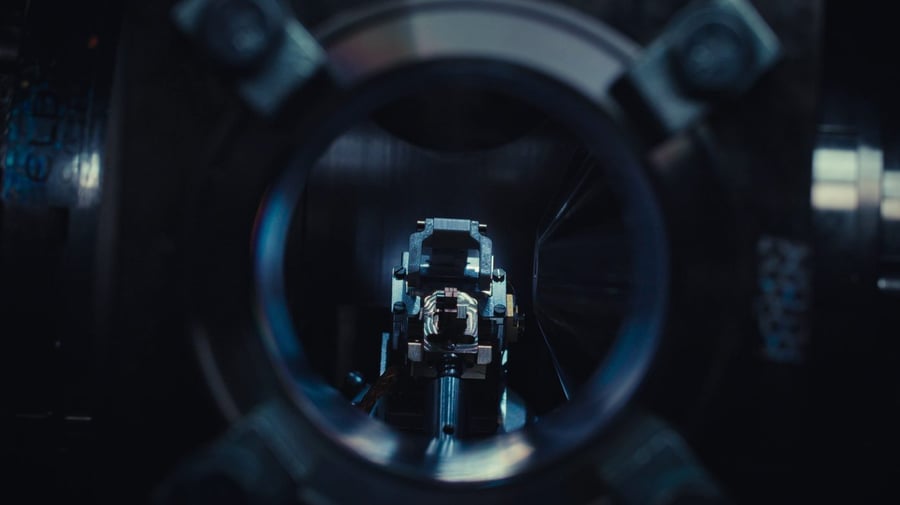
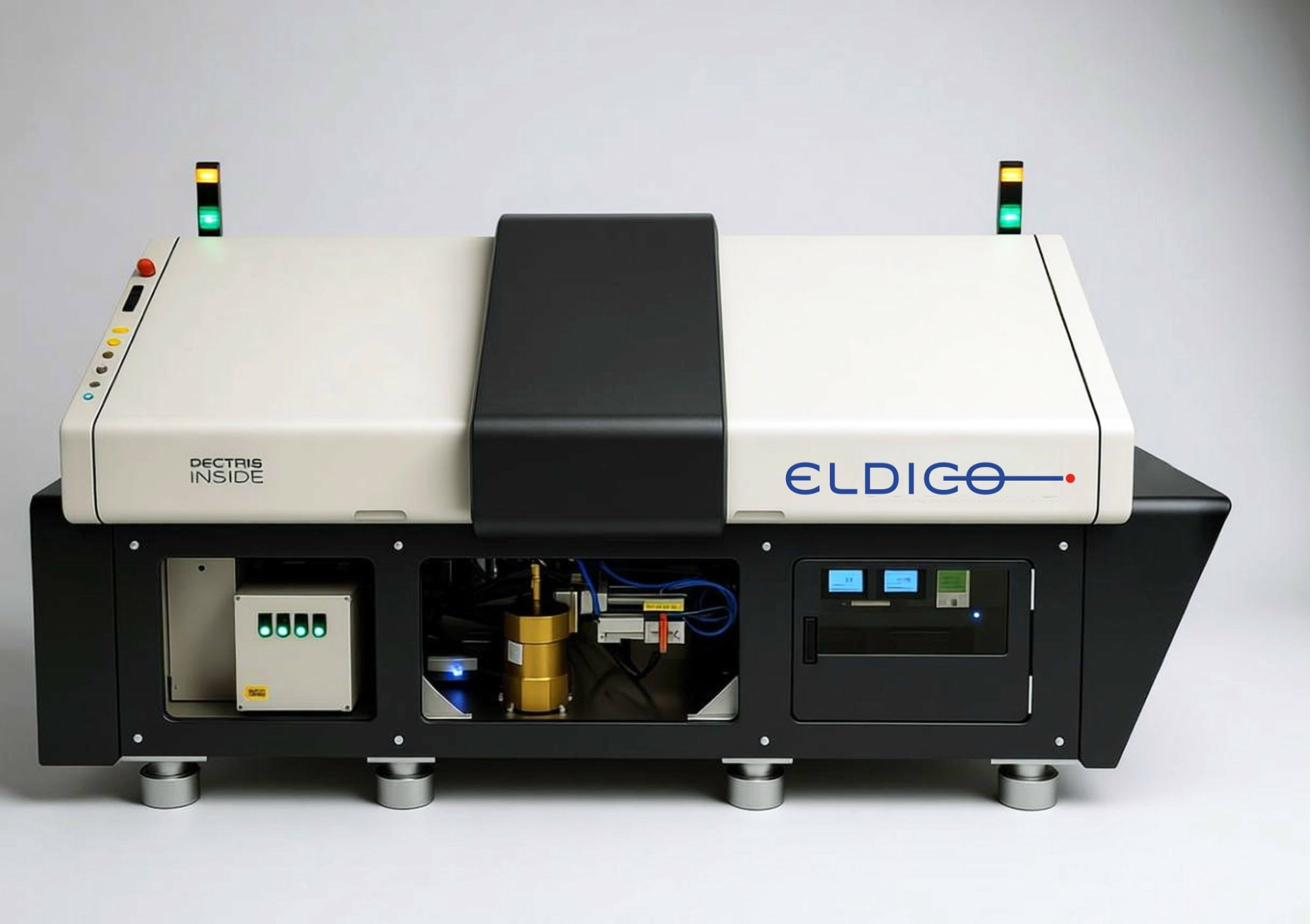
ED-1
The dedicated electron diffractometer.
Purpose-built for 3D electron diffraction from the start – so nanocrystal structure determination is a reliable, repeatable measurement rather than a specialist improvisation on a borrowed microscope.
Pharma
The ED-1 is widely used for pharmaceutical solid-form analysis. See ED for pharma →
Capability
What ED-1 resolves.
Structures from nanocrystals
Complete single-crystal-quality structures from sub-micrometre crystallites – typically down to ~50 nm, sample-dependent – material far below the size threshold where single-crystal X-ray can be attempted.
Trace and minor phases
Works at the single-crystallite level, so phases present below the powder-diffraction detection limit can be isolated and solved individually.
Air- and moisture-sensitive material
A sealed inert transfer path carries reactive, hygroscopic and cryo-prepared samples from the glovebox to the instrument without exposure to air, moisture or icing.
Scarce material
Milligram-scale sample requirements make it viable for early-stage APIs, precious batches and forensic quantities.
Engineering
The hardware that makes it dedicated.
Because the ED-1 was designed for electron diffraction from the ground up – not adapted from a general-purpose microscope – its core components work together as one measurement system.
The goniometer
Align and rotate around any particle on the grid.
Five independent translation axes and one rotation axis centre any crystallite on the grid in the beam and rotate around it – the same principle as single-crystal X-ray, brought to nanocrystals. A small sphere of confusion keeps the particle in the beam through a wide −100° to +100° rotation, with contact cryo-cooling integrated.
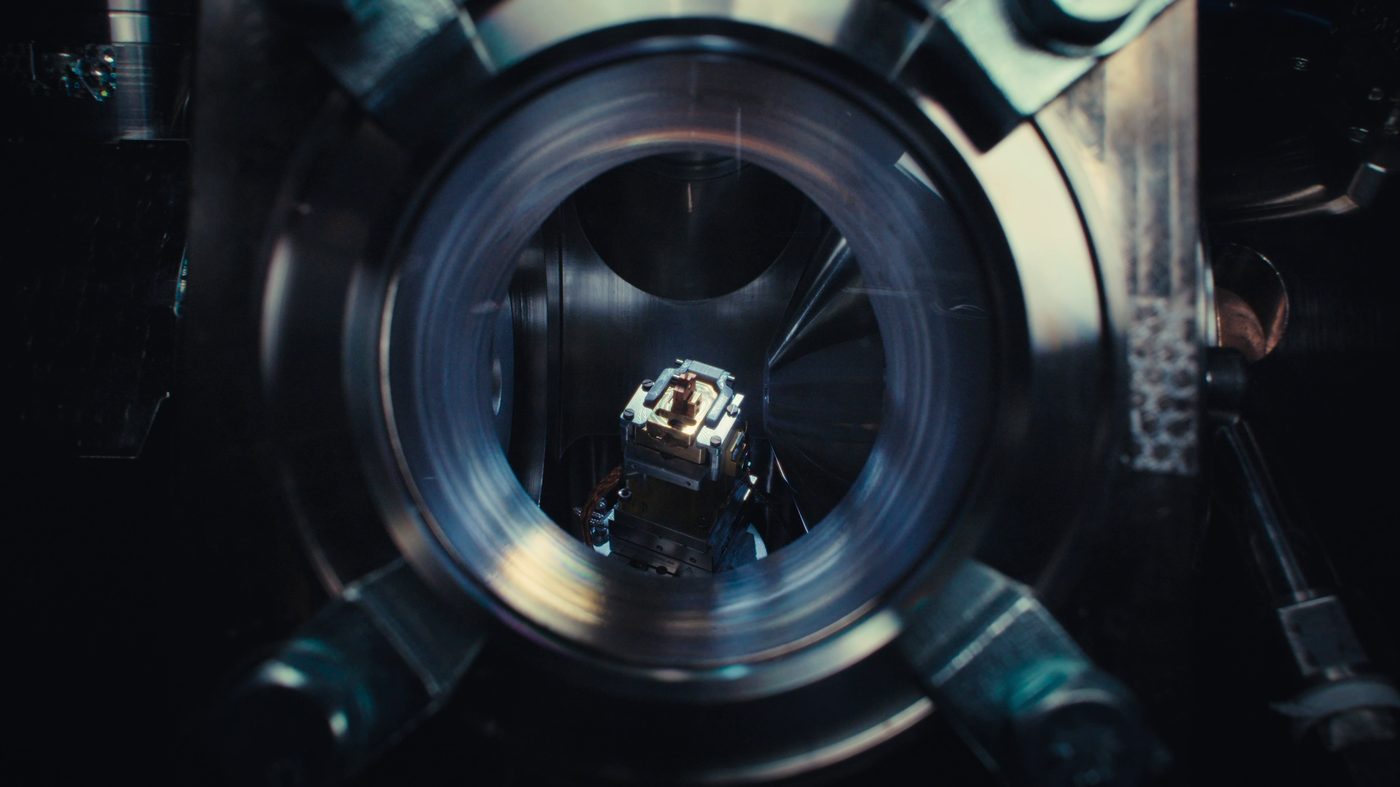
This is what turns electron diffraction from a specialist improvisation into a repeatable measurement: every particle is found, aligned and measured deliberately – opening serial ED and crystal-mapping workflows on a single grid.
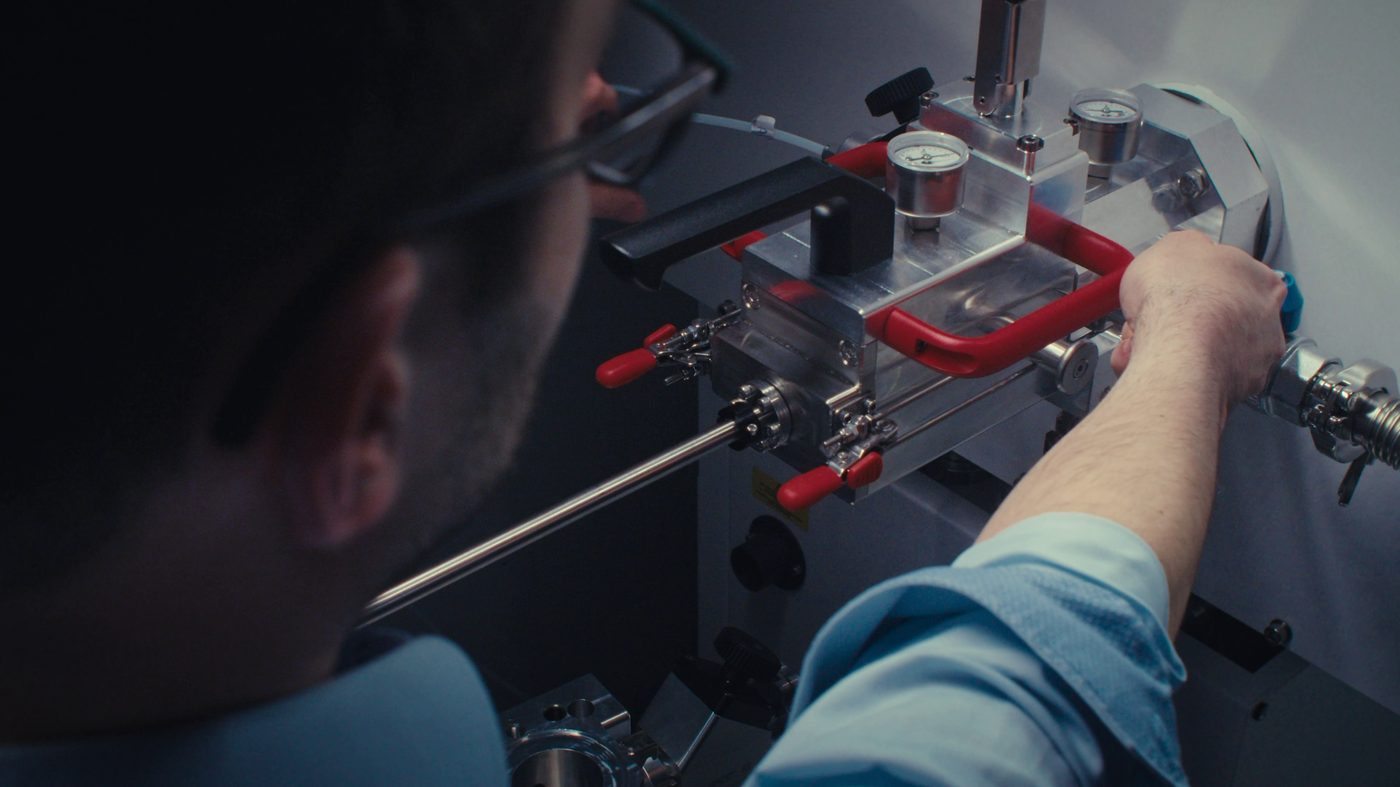
Inert sample transfer
A sealed transfer device moves reactive, hygroscopic and cryo-prepared samples from the glovebox to the instrument with no exposure to air, moisture or icing.
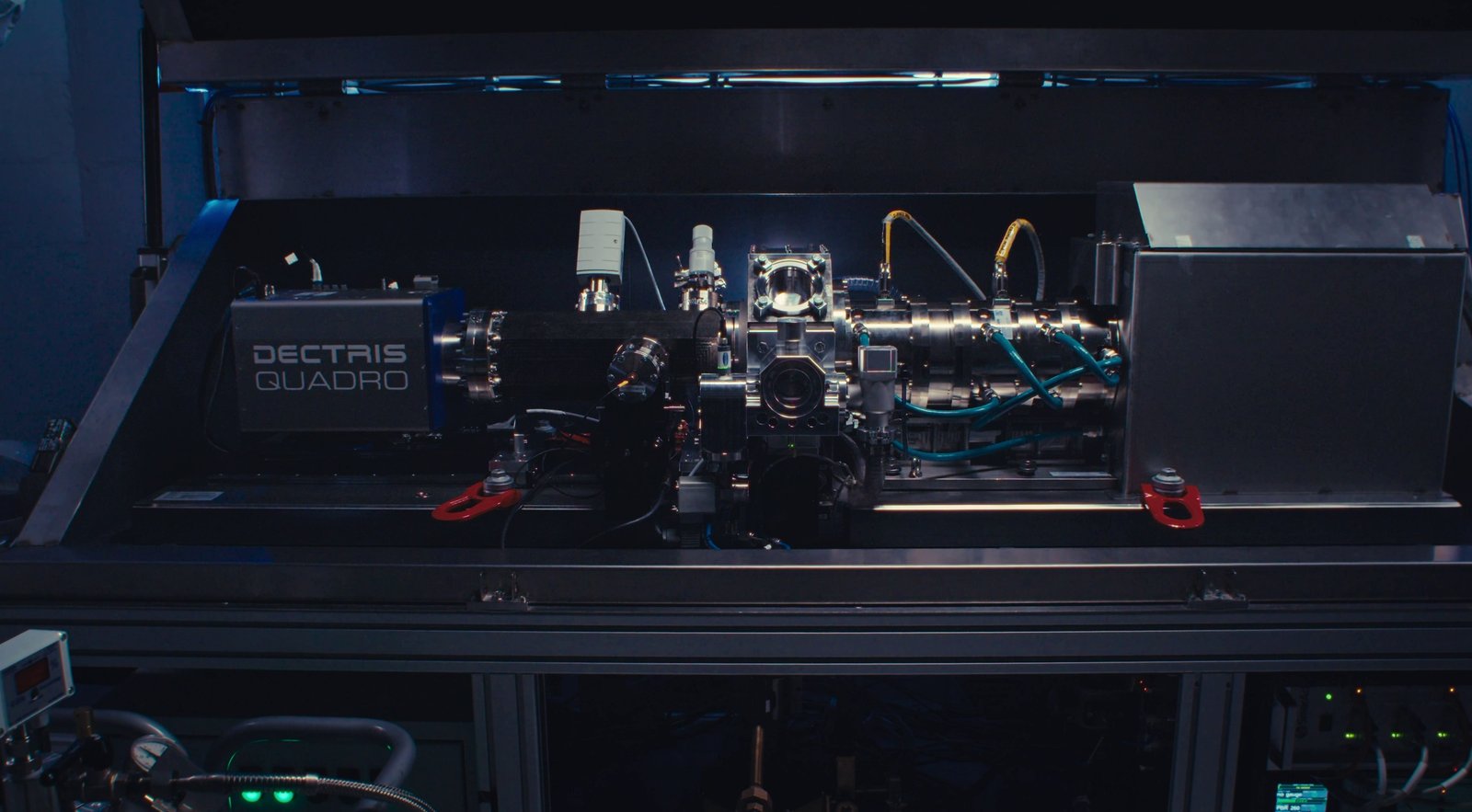
DECTRIS HPAD noise-free detector
Fast, clean readout with no beam stop and a short dead time delivers undistorted raw data that exports straight into your structure-solution workflow.
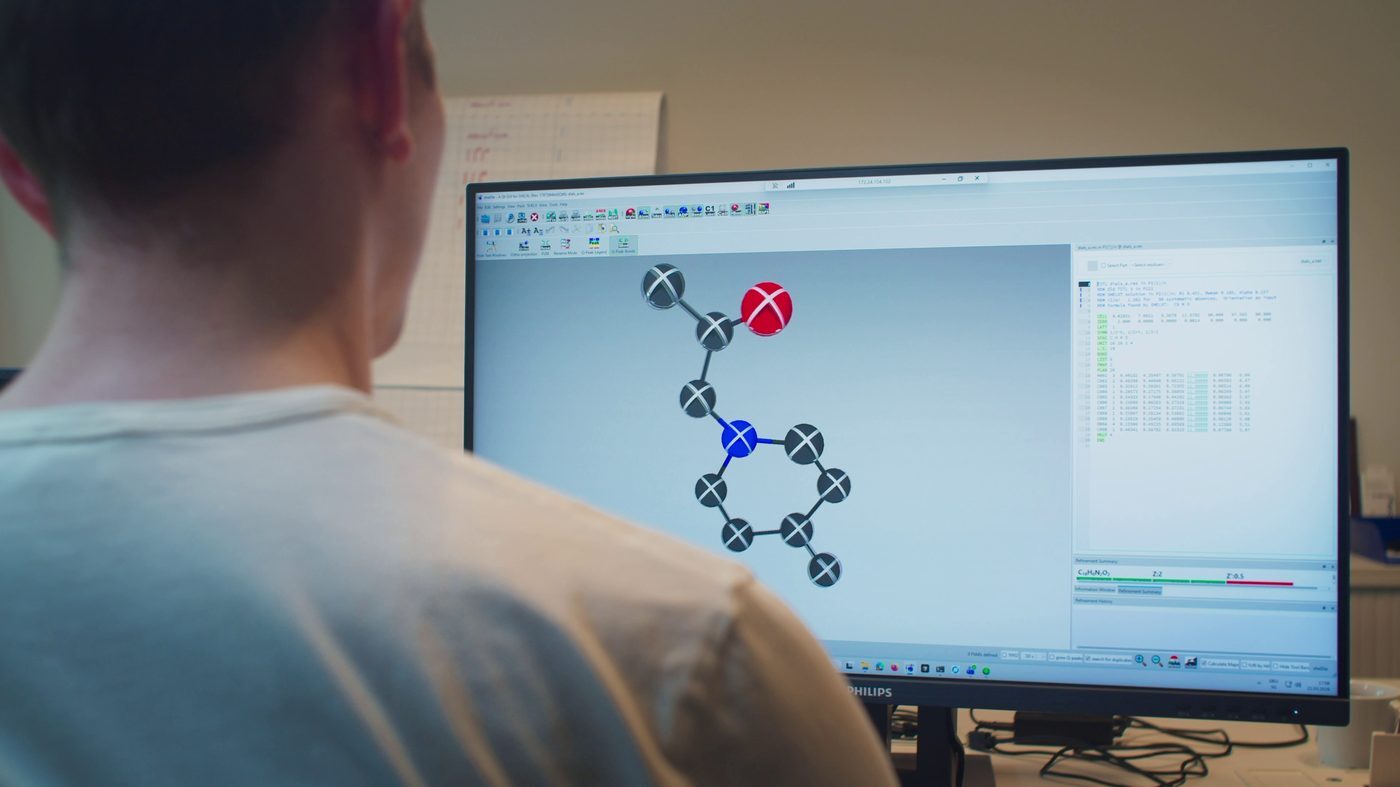
Built for automation
Dedicated software handles particle recognition, alignment and data evaluation, so the instrument runs as a routine analytical tool rather than a bespoke experiment.
The goniometer's large sample area is designed to accommodate custom and multi-sample holder configurations, extending the same measurement to larger sample sets as those workflows mature.
Configurations
Configured to your science.
ED-1 is offered in configurations matched to the range of samples and questions a lab works with. The right configuration depends on your material and workflow – which is what the specifications conversation establishes.
Core
The complete dedicated-ED measurement capability for structure determination on challenging crystalline material.
Extended sample handling
Additional preparation and environment options for demanding or sensitive sample classes.
Lab integration
Fitted to an existing analytical workflow alongside XRPD and complementary techniques.
Application fit
Where owning ED-1 makes sense.
Pharmaceutical R&D and QC
Routine solid-form work – polymorphs, salts, cocrystals, hydrates and impurities – where sending every sample out becomes the bottleneck.
Agrochemical & fine chemical
In-house structural certainty for compounds that resist conventional crystallography.
Academic crystallography
A dedicated ED capability for groups working at the frontier of nanocrystalline structure.
Contract and analytical labs
Adding electron diffraction as a differentiated service line of your own.
Why dedicated matters
Built for ED, not adapted to it.
Reproducibility
A geometry and workflow designed around electron diffraction give consistent, comparable results run to run.
Accessible operation
The measurement is designed to be run by your crystallographers, not only by electron-microscopy specialists.
A workflow, not a workaround
Sample handling, acquisition and structure solution are one coherent path rather than stitched-together steps.
Full specifications on request.
We share the complete technical specifications, configuration detail and commercial terms directly, matched to your application. It's a short conversation with our instrument team – so what you receive is relevant to your material and lab rather than a generic sheet.
Tell us a little about your context and we'll take it from there.